

Interview with VICENTE RICHART CONEJERO · Senior Sports Technician on the Municipal Sports Board of Castellón.
VOICES OF THE REGION
Carries out the supervision and maintenance of 18 sports facilities and the competitions held at the municipal pools.
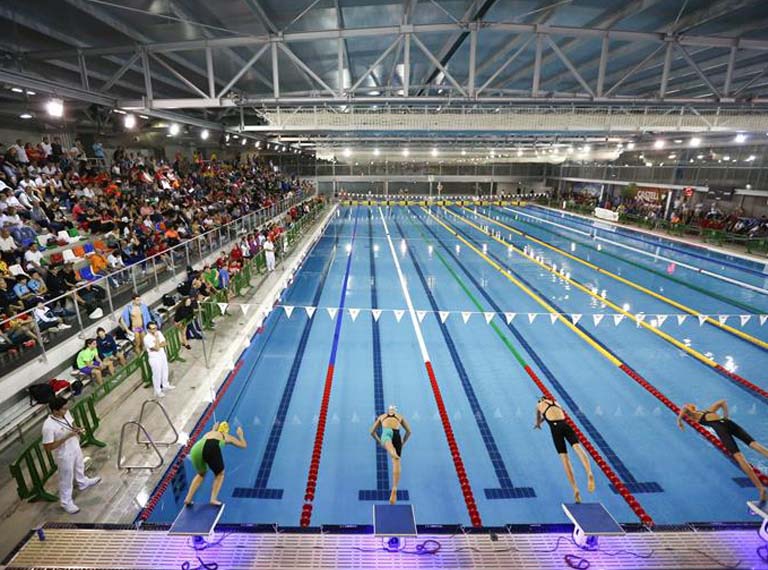
Castellón’s municipal swimming pool, opened in 2007, brings together the activity of the city’s competition clubs, programmes for citizens and the frequent hosting of sporting events. Vicente Richart explains how preventive maintenance, monitoring and the design of the premises can overcome the challenges facing a public infrastructure that receives around 280,000 visitors each year.
| Facility | Municipal Olympic Pool |
| Location | C/ Prolongación Río Júcar, s/n · 12006 Castellón de la Plana |
| Opened | 2007 |
| Facilities | A main 50m×25m pool 2m deep, a motor-driven movable wall and a 25m×6m pool for learners. |
| Maximum number of spectators | 603 places in the permanent stand; mobile stands that can increase the capacity to about 1,000 seated people. |
| Activity | Swimming, artistic swimming, water polo, triathlon, courses for children and adults, aqua aerobics, parent-and-baby swimming and other educational and sporting uses. |
| Annual activity | Approximately 280,000 visits. |
| Improvements in 2025 and 2026 | Sliding windows for summer ventilation, a 5m×3m giant screen and replacement of the public address system. |
| Planned improvement | Optimisation of the mobile wall movement system. |
1. The Municipal Olympic Pool in Castellón is a flagship infrastructure for sporting activities and the hosting of competitions. What role does it play as one of the city’s sports facilities, and how are the different uses, from recreational swimming to training and competition, catered for?
The Municipal Olympic Pool is primarily intended for use by the city’s competition clubs, thus satisfying a long-standing demand in a capital city with a healthy tradition in aquatic sports. This was consolidated with its opening in 2007, leading to an exponential increase in the standard of sport across all the disciplines. This doesn’t prevent the premises from being shared with other collectives, and the Board attempts to meet all their needs. As for competitions, it could be claimed that there is no weekend without some kind of activity, but the excellent relationship with the local clubs and federations means that the daily activities are affected only at certain specific times of the year.
2. Managing a municipal Olympic pool poses a significant technical and financial challenge. What are the main operational challenges at the moment, particularly in terms of energy consumption, water treatment and maintenance? What measures are you applying to improve its efficiency?
Our main concerns, as with most heated swimming pools in Spain, are the varying costs to heat the pool itself and the consumption of chemicals to treat the water, each exacerbated by the different international conflicts we’ve witnessed in recent years. To address the above, we’ve implemented various tools to monitor consumption, particularly ones to control the maintenance, as we believe that keeping all the parameters stable is essential if we want to prevent unnecessary costs.
Fortunately, the team of the Municipal Sports Board includes a pool maintenance expert, my colleague José Domingo, who, together with the company that provides us with the service and the rest of the maintenance team, ensures that users can enjoy exceptional water quality and decent sports facilities.
“Ongoing maintenance and monitoring can preserve an Olympic pool that’s nearly two decades old without the need for a major refurbishment”
3. As the years go by, technological renewal becomes key to maintaining service quality. What modernisation measures have you implemented recently, and which criteria do you use to prioritise new investments?
In our case, constant maintenance keeps the Municipal Olympic Pool “young”, despite the fact that it’s existed for nearly two decades. Even so, in recent years we’ve invested in technological improvements by introducing maintenance and incident-tracking forms (Jotform), Kanban-style boards (Trello) and real-time parameter monitoring with alerts.
As for investments, we’re studying new technologies for the physicochemical treatment of the water. This is why we regularly attend Piscina Barcelona, at which we keep track of the latest innovations in the industry. However, the tendering processes of the public administrations take time, and these are decisions that require careful consideration before any procurement.
“Federated swimming and health-focused aquatic activities can co-exist if the premises are appropriately designed from the outset”
4. Public sports facilities must also fulfil goals related to accessibility, health and inclusion. How are users’ needs evolving, and what changes do you regard as necessary so as to adapt municipal pools to the demands of the coming years?
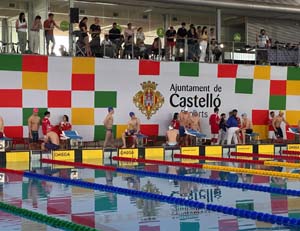
As the Municipal Olympic Pool hosts championships in all kinds of disciplines, including those aimed at people with disabilities, we often make use of these events by asking the organisers what improvements could be made to the facility to make it more accessible. We should highlight the 2020 Castalia Castellón International Trophy, which was the first pool event to serve as a simultaneous qualifying round for the Olympic and Paralympic Games.
At a municipal level, town and city councils should start to rethink the design of aquatic facilities to meet the growing demands of federated sport and those of the numerous people who use swimming pools to care for and improve their health. It’s often assumed that the two uses compete with each other, but I believe this isn’t the case, as they can co-exist with a good design. Sport technicians have a great deal to contribute to this analysis, so it’s important for us to work with the infrastructure teams from the outset of the project for the new facilities.
5. Based on your experience, what do you regard as the main future challenges facing municipal pools in the Valencian Community? Which recommendations would you give to other authorities that are planning new facilities or refurbishing existing ones?
The main challenge lies in creating more pools that are suitable for competitive events. In my opinion, sport attracts sport. By the above I mean that if a town hall organises aquatic events at its swimming pool, it may encourage more people to take up the discipline and, as a result, increase the number of users.
As for recommendations, I’d advise them to visit as many pools as they can before they draw up their first plan. This doesn’t involve inventing anything new, as there are excellent examples of first-rate aquatic facilities throughout Spain.
6. We know that you regularly attend Piscina Barcelona. Based on your experience, what value does this event bring to managers of municipal sporting facilities? Which solutions, innovations and professional contents do you regard as particularly relevant to your work?
Everyone responsible for municipal aquatic facilities should attend Piscina Barcelona, as it provides them with a chance to learn more about the latest developments in the industry and puts them in touch with the suppliers, who are always willing to offer solutions to the problems they encounter each day. Similarly, meeting people you normally only speak to over the phone in person adds value to the customer–supplier relationship.
In our case, we tend to focus our visits on the latest breakthroughs in water treatment, as reducing the consumption in an Olympic-sized pool saves the money of the local authorities and, consequently, all its taxpayers.
“Anyone wishing to learn more about advances in water treatment and contacting suppliers that provide solutions for public-sector managers should attend Piscina Barcelona”